1 / 30
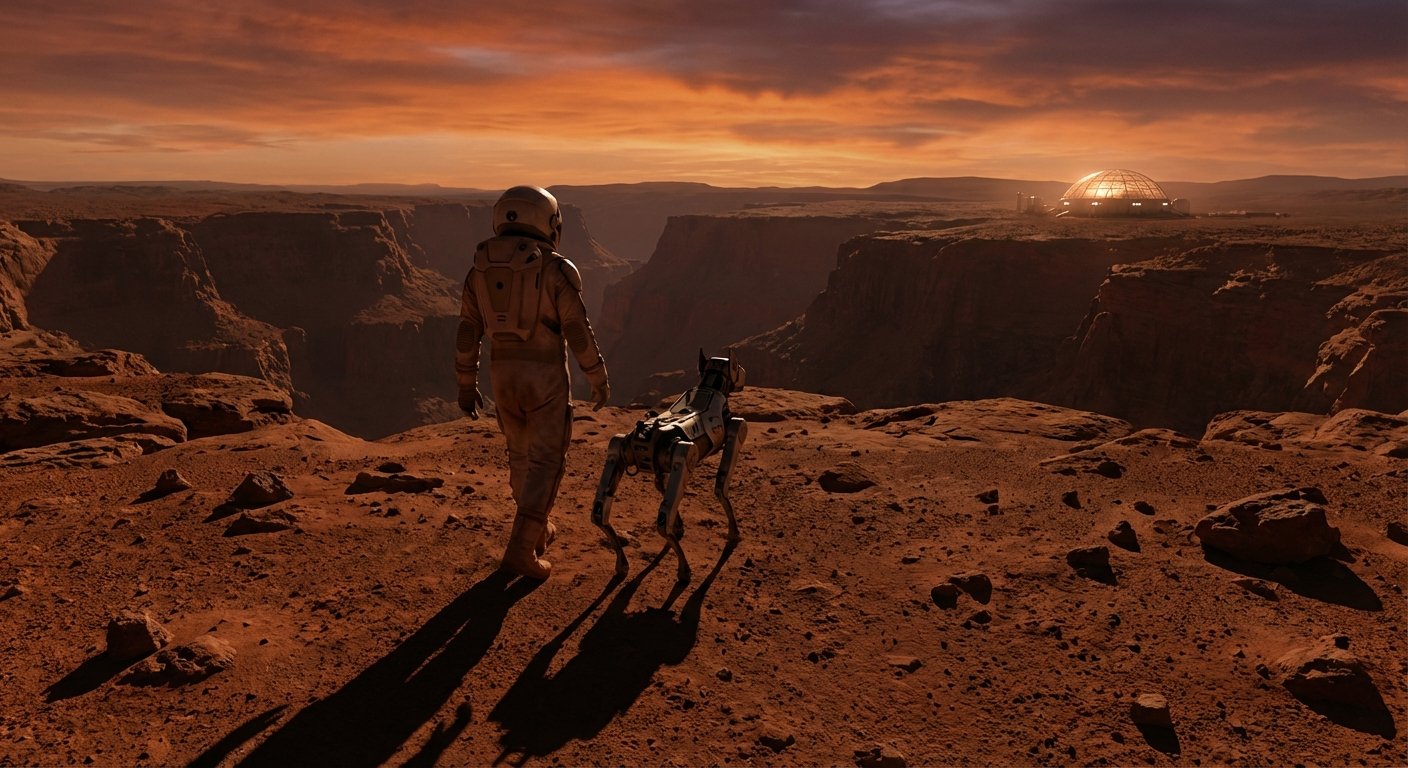
Mars surface panorama at golden hour

Red Rovers, Red Rovers,
Bring Martians on Over

Jim Bell

Arizona State University

Shoemaker Lecture 2025 American Geophysical Union Conference December 15, 2025
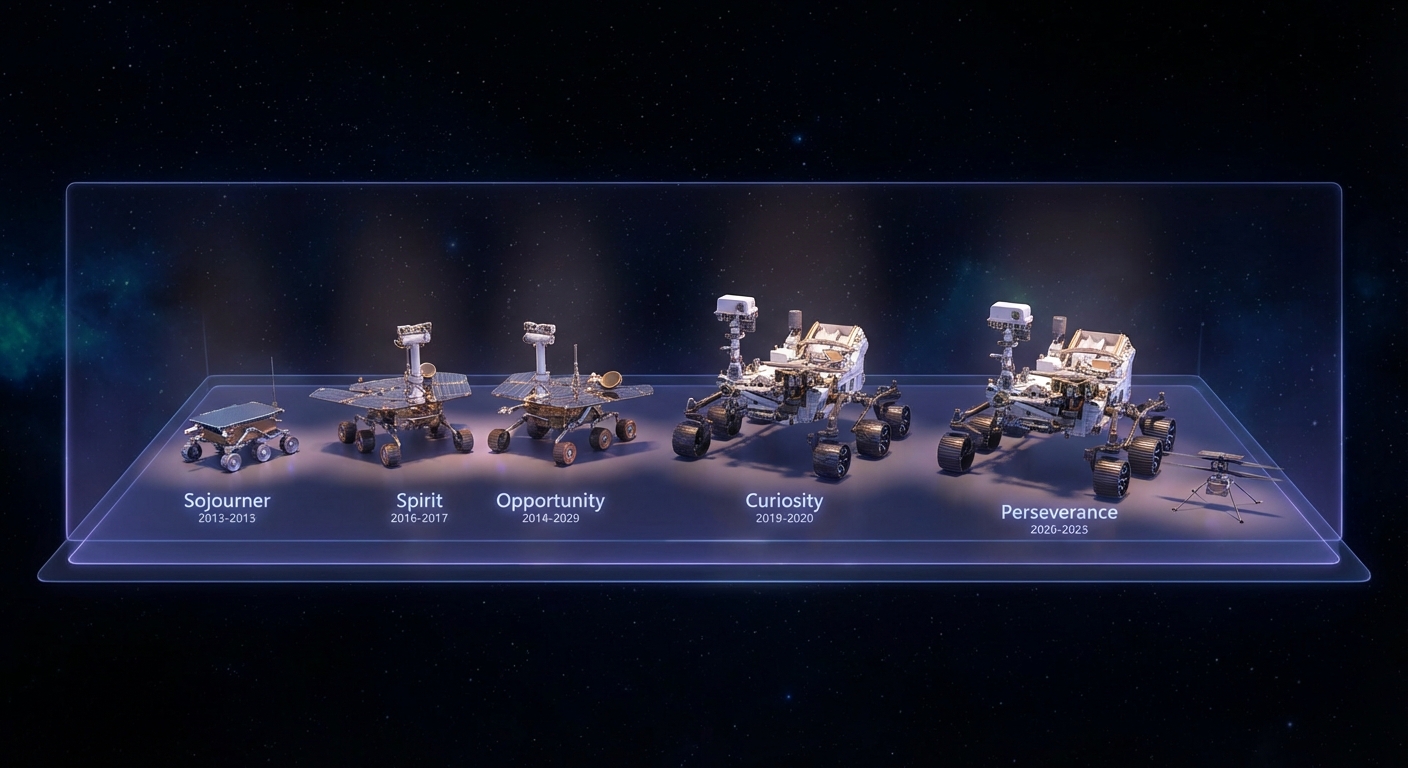
Mars rover family portrait

Tonight's Journey

  • Five decades of robotic exploration on Mars
  • Key scientific discoveries that have reshaped our understanding
  • The technological revolution from Sojourner to Ingenuity
  • Current missions and the road to sample return
  • Eugene Shoemaker's enduring legacy in planetary science
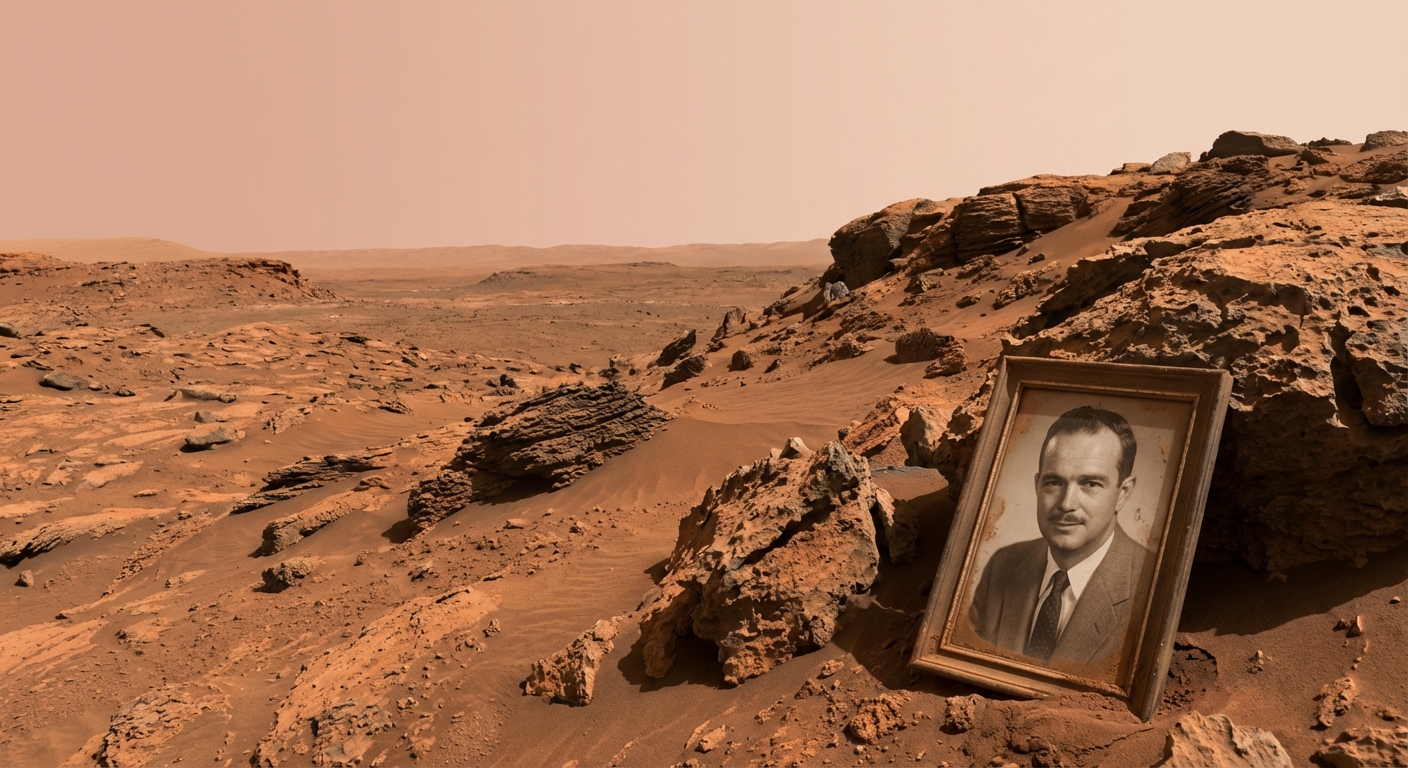
Eugene Shoemaker tribute

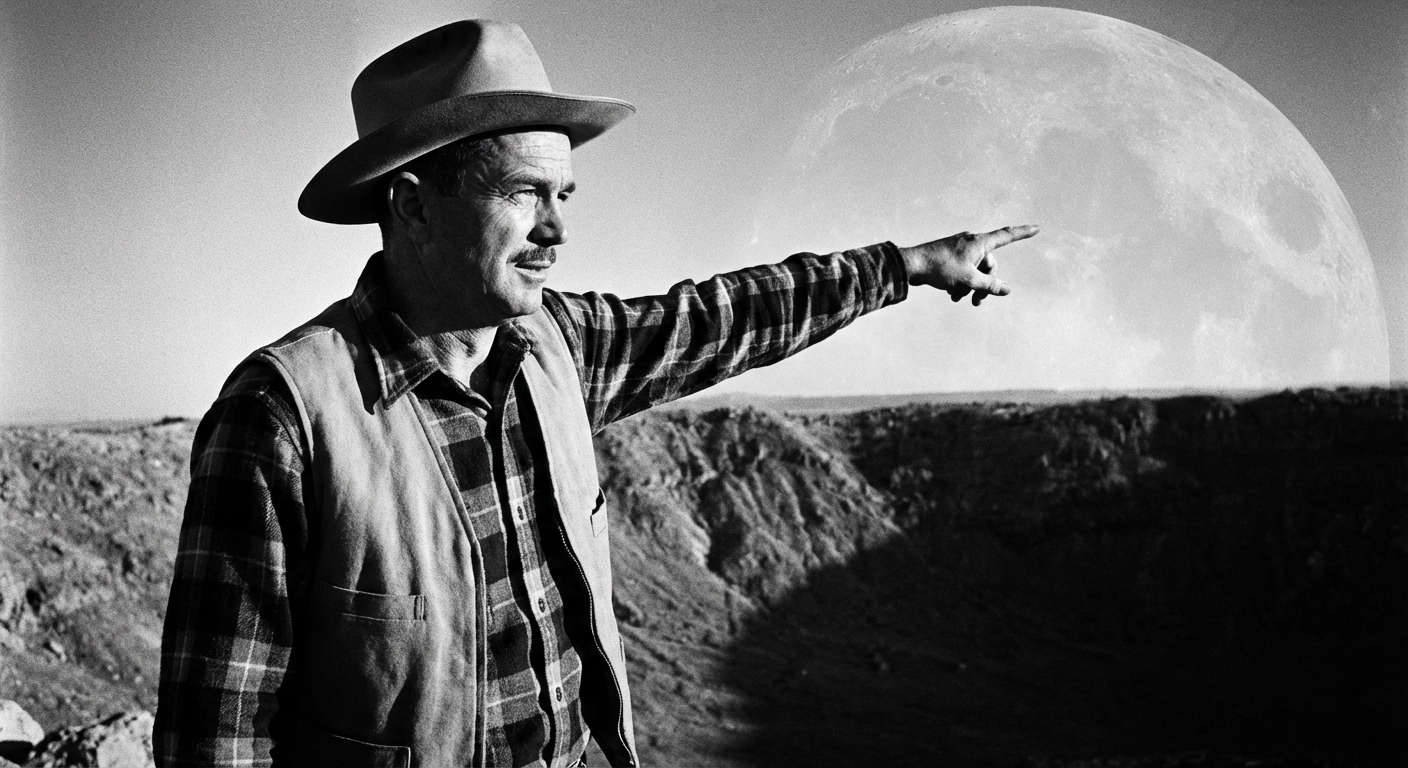
Eugene ShoemakerThe Father We All Share

  • Co-founded planetary geology as a discipline
  • Proved Barringer Crater was formed by impact (1960)
  • Trained Apollo astronauts in field geology
  • His impact crater studies became foundational to Mars surface interpretation
"The Moon is a record of the history of the solar system."
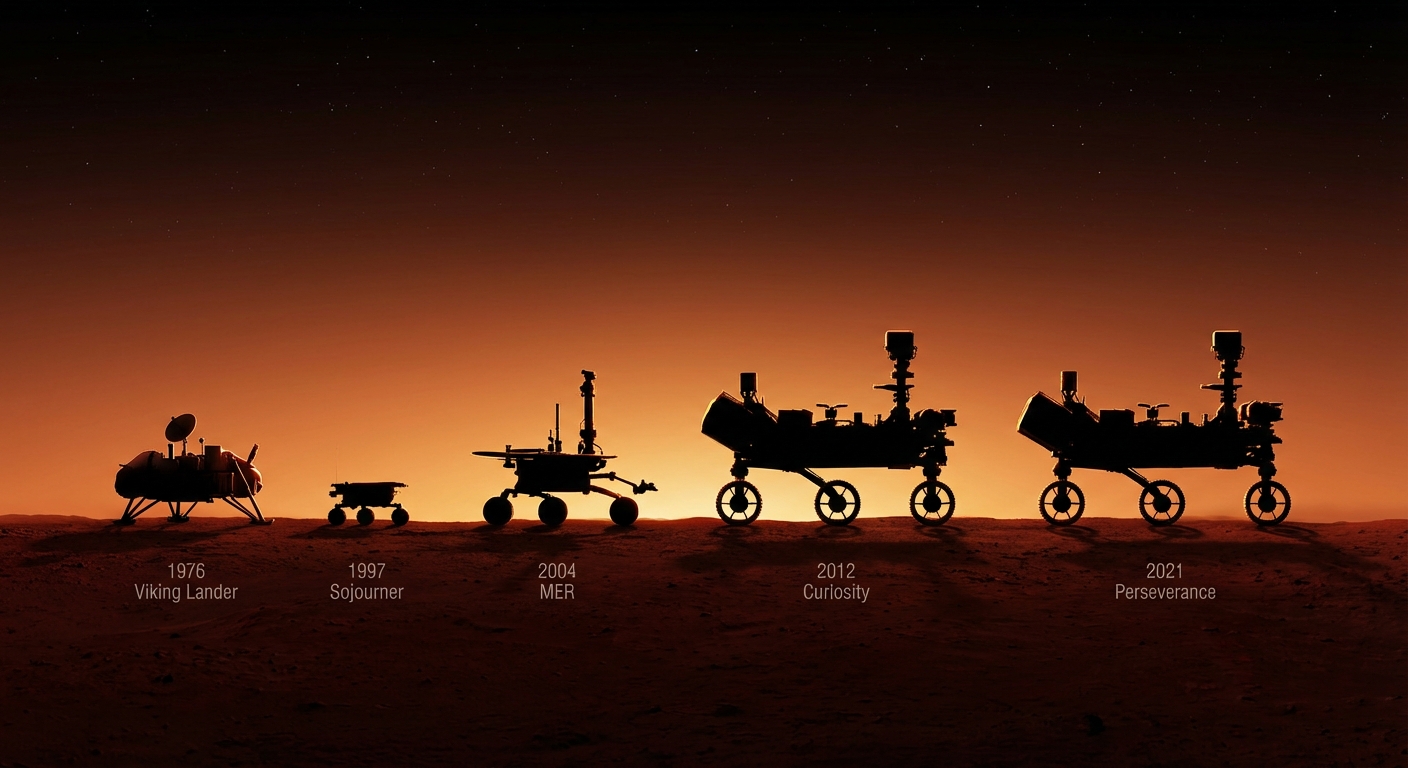
Mars missions timeline infographic

50 Years of Red Planet Exploration

  • 1976 Viking 1 & 2 — First successful Mars landings
  • 1997 Mars Pathfinder & Sojourner — First rover mobility
  • 2004 Spirit & Opportunity — Extended exploration, water evidence
  • 2012 Curiosity — Advanced geochemistry, habitable environments
  • 2021 Perseverance & Ingenuity — Sample caching, aerial flight
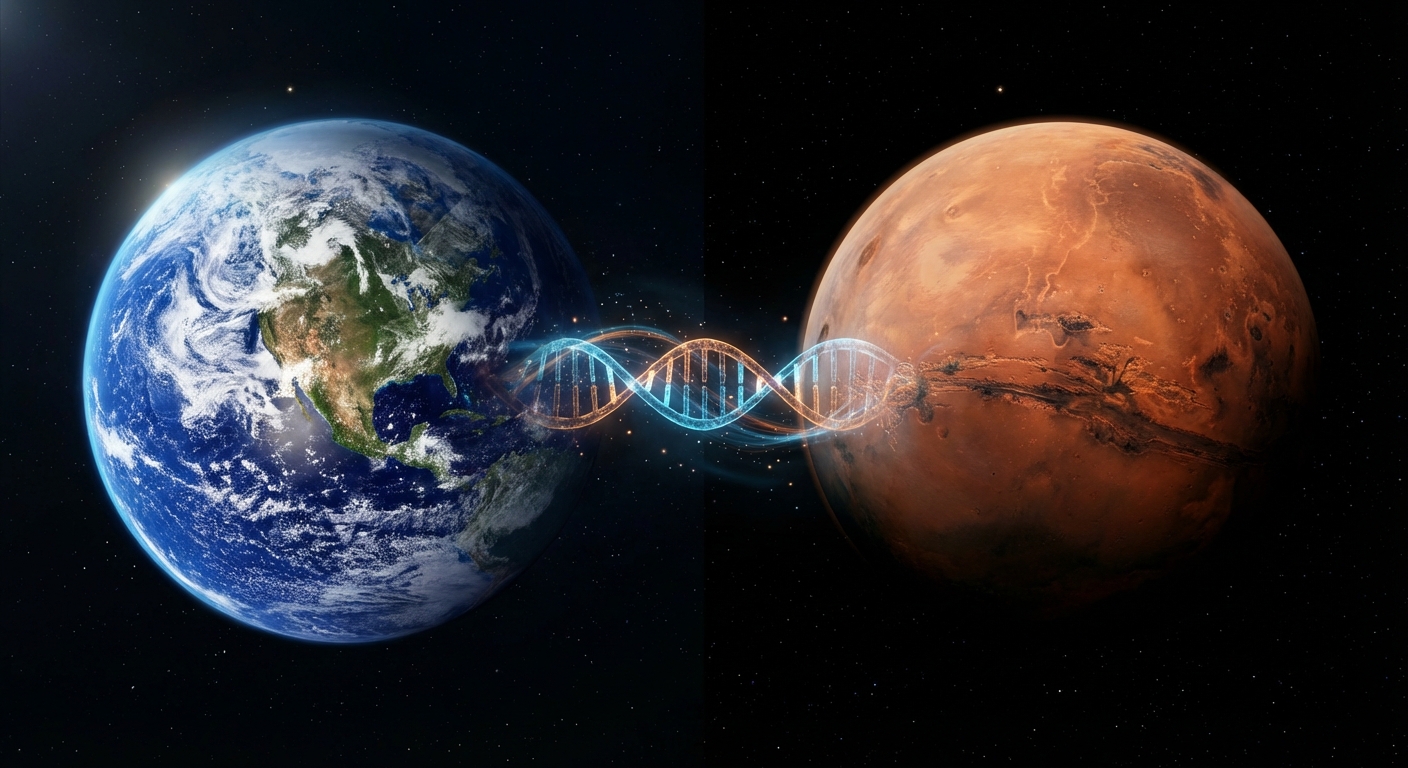
Earth and Mars comparison

Why Mars Matters

  • Most Earth-like planet accessible for detailed surface study
  • Preserves ~4 billion year record of planetary evolution
  • Key questions Mars can answer:
  • Did life arise independently on another world?
  • What determines planetary habitability?
  • What is Earth's future as a potentially drying world?
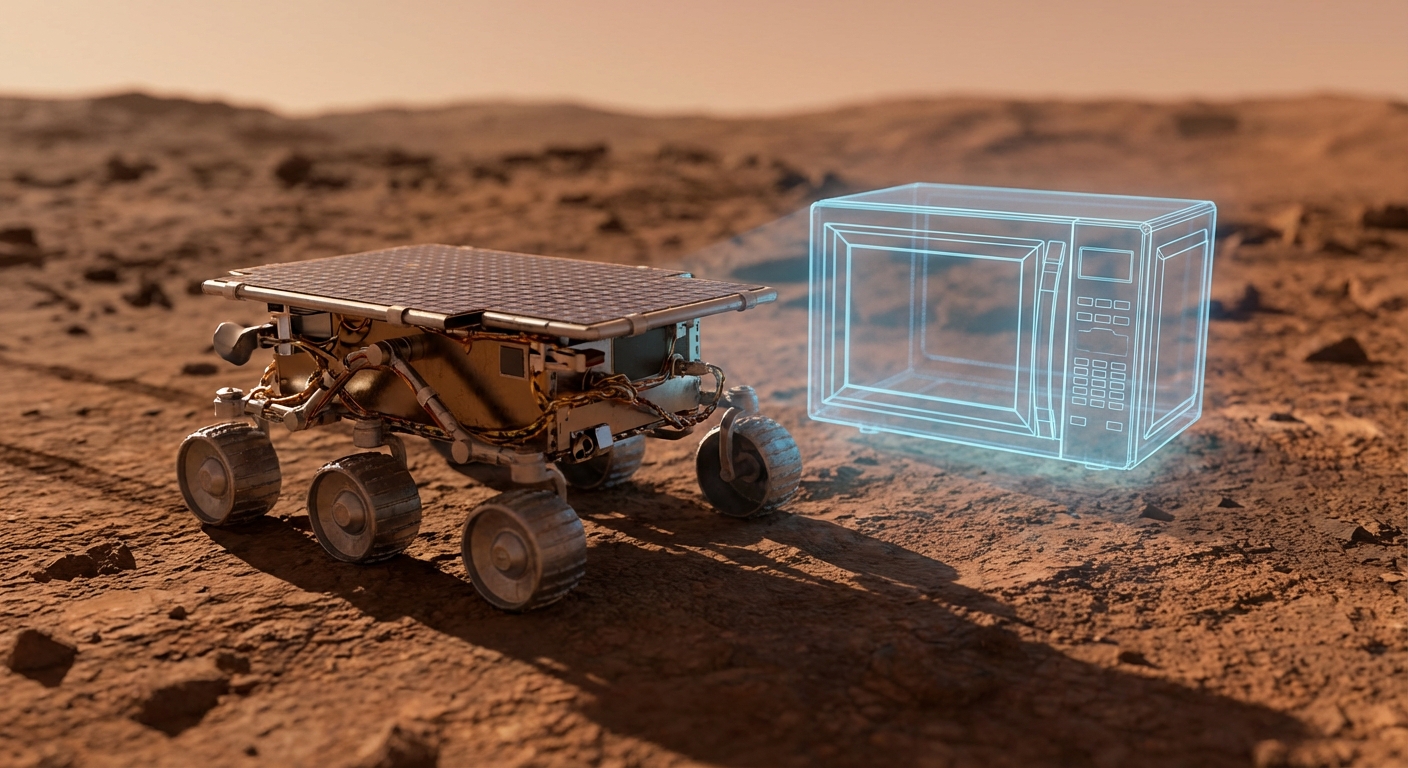
Sojourner rover with scale reference

SojournerThe Little Rover That Could

  • Landed July 4, 1997 — first Mars landing in 21 years
  • Sojourner rover: 10.6 kg, ~65 cm long
  • Total traverse: ~100 meters over 83 sols
  • Demonstrated airbag landing system
  • Alpha Proton X-ray Spectrometer (APXS) — first mobile geochemistry
  • Engineering proof of concept for future rovers
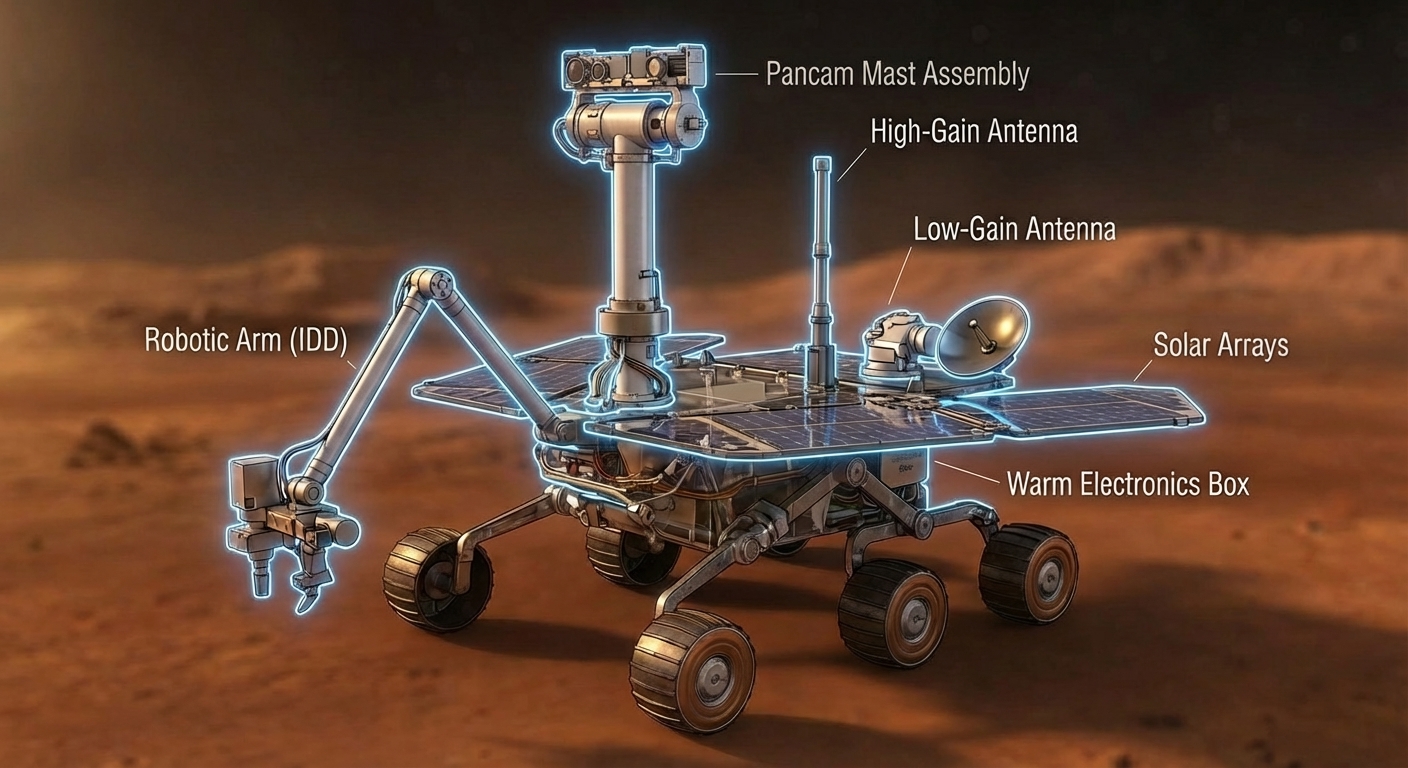
Spirit and Opportunity rovers

Spirit & OpportunityThe Marathon Runners

  • Landed January 2004 at Gusev Crater & Meridiani Planum
  • 90-day design life → Spirit: 6 years / Opportunity: 15 years
  • Opportunity traverse: 45.16 km — a marathon distance
  • Science payload:
  • Panoramic Camera (Pancam)
  • Mini-TES, Mössbauer Spectrometer, APXS
  • Rock Abrasion Tool (RAT)
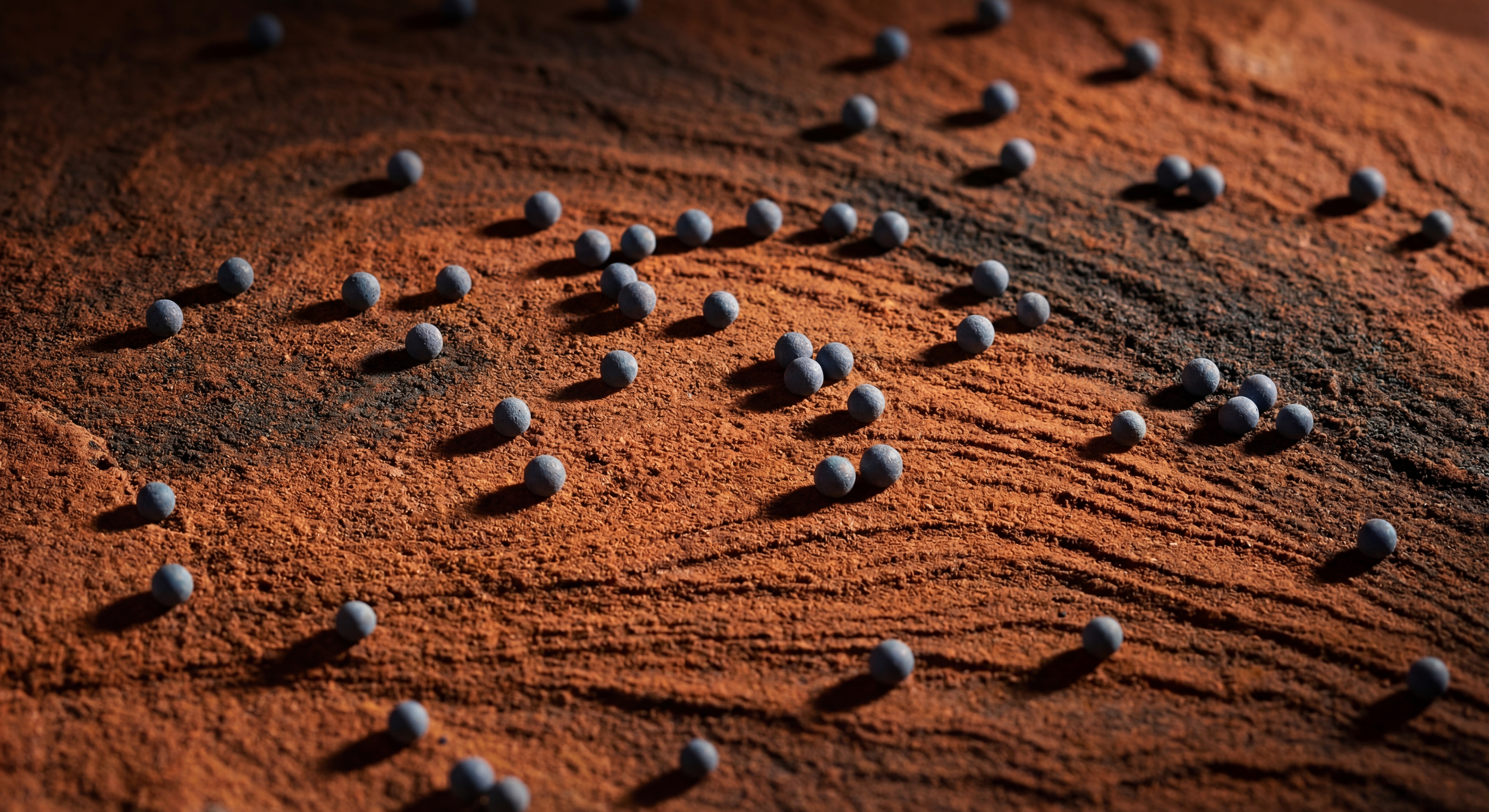
Hematite blueberries close-up

Water, Water, Everywhere(Once)

Meridiani Planum (Opportunity)

  • Hematite "blueberries" — concretions formed in water
  • Cross-bedded sandstones
  • Sulfate-rich evaporite rocks

Gusev Crater (Spirit)

  • Columbia Hills: water-altered rocks
  • Silica-rich soils (>90% silica)
  • Evidence of hydrothermal systems

Mars had sustained liquid water at the surface

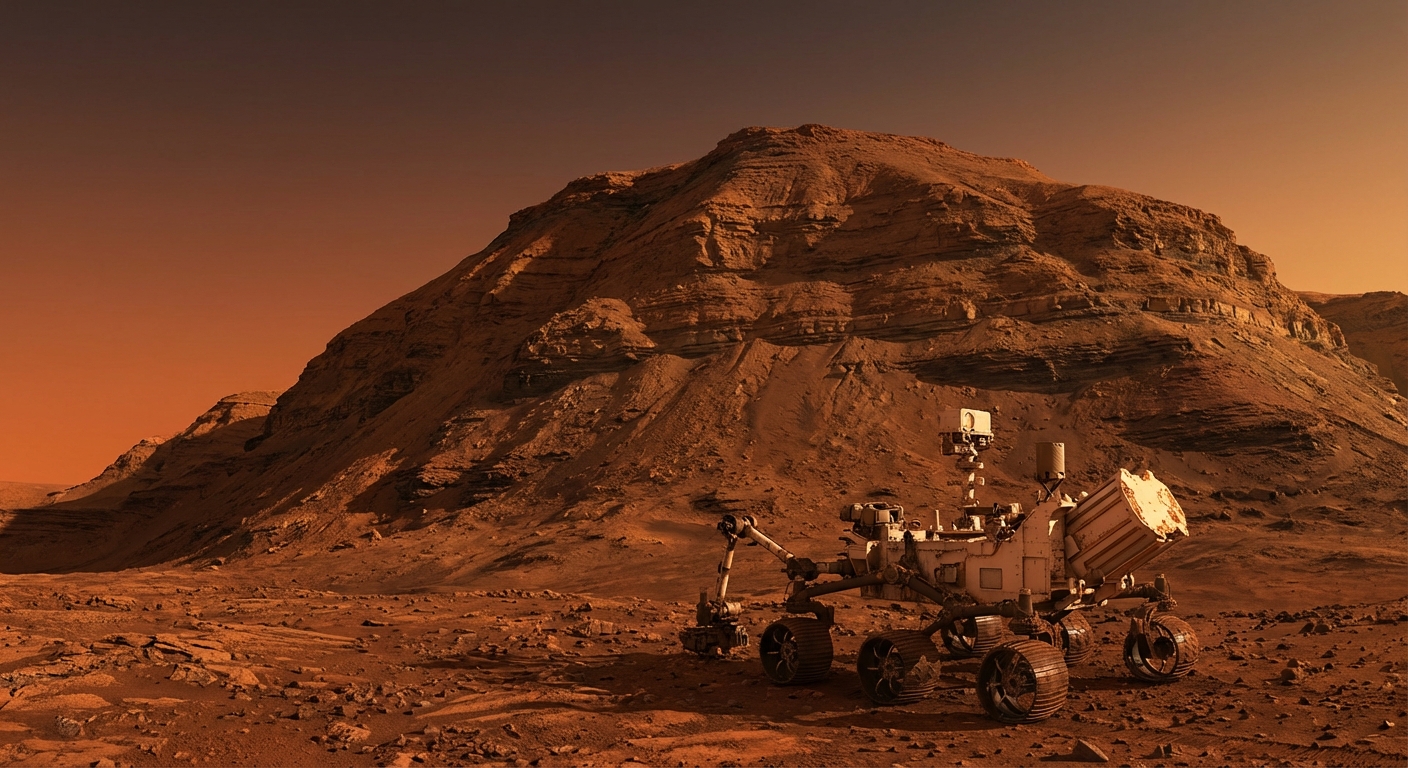
Curiosity rover with Mount Sharp

CuriosityThe Mobile Laboratory

  • Landed August 2012 in Gale Crater
  • Nuclear powered (MMRTG) — no solar panel limitations
  • Full analytical chemistry lab onboard:
  • Sample Analysis at Mars (SAM)
  • Chemistry and Mineralogy (CheMin)
  • ChemCam laser-induced spectroscopy
  • Mastcam imaging
  • Still operating today, climbing Mount Sharp
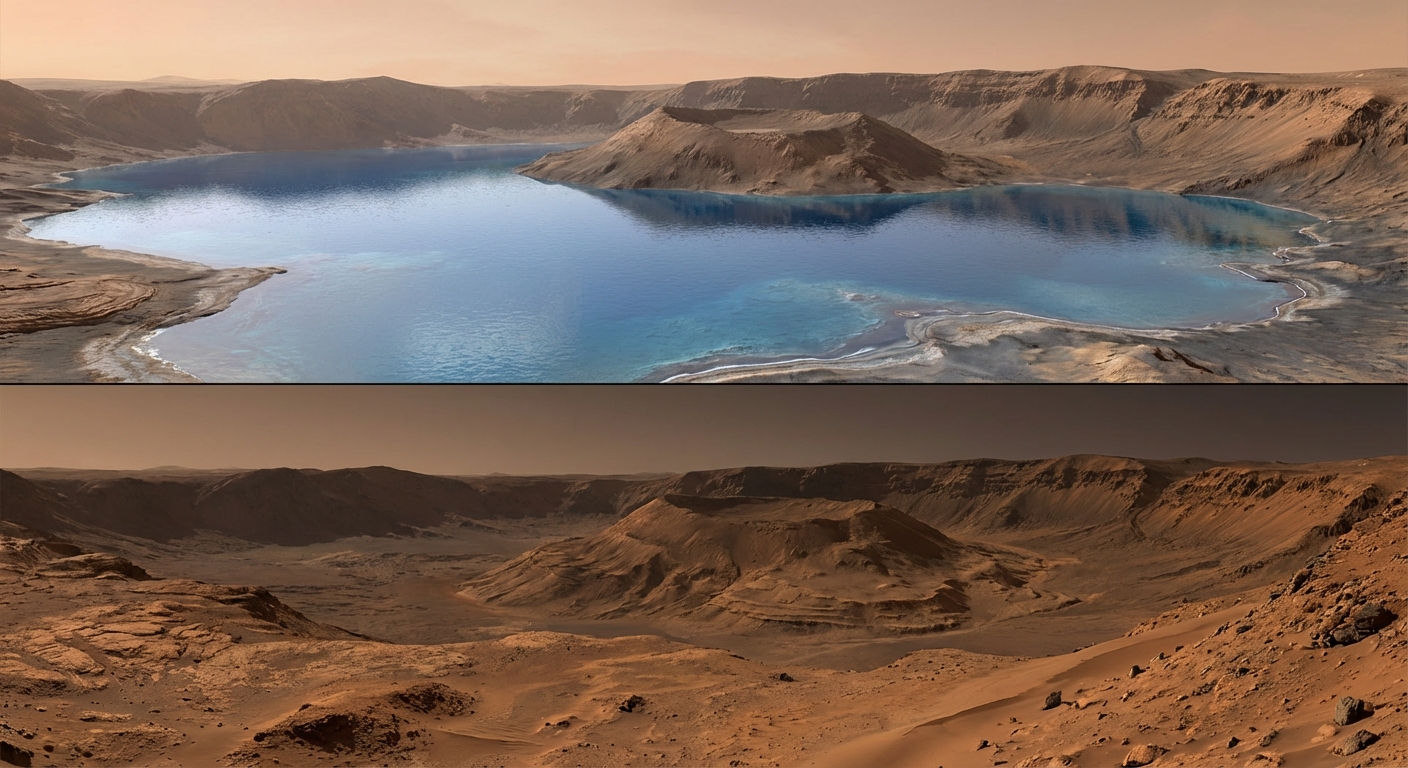
Ancient Gale Crater lake reconstruction

An Ancient Habitable Lake

  • Gale Crater: 154 km diameter, ~3.7 billion years old
  • Evidence for long-lived freshwater lake:
  • Fine-grained mudstones (Yellowknife Bay)
  • Lacustrine (lake-deposited) sediments
  • Circumneutral pH water
  • All key requirements for life were present:
  • Liquid water • Chemical building blocks (CHNOPS) • Energy sources
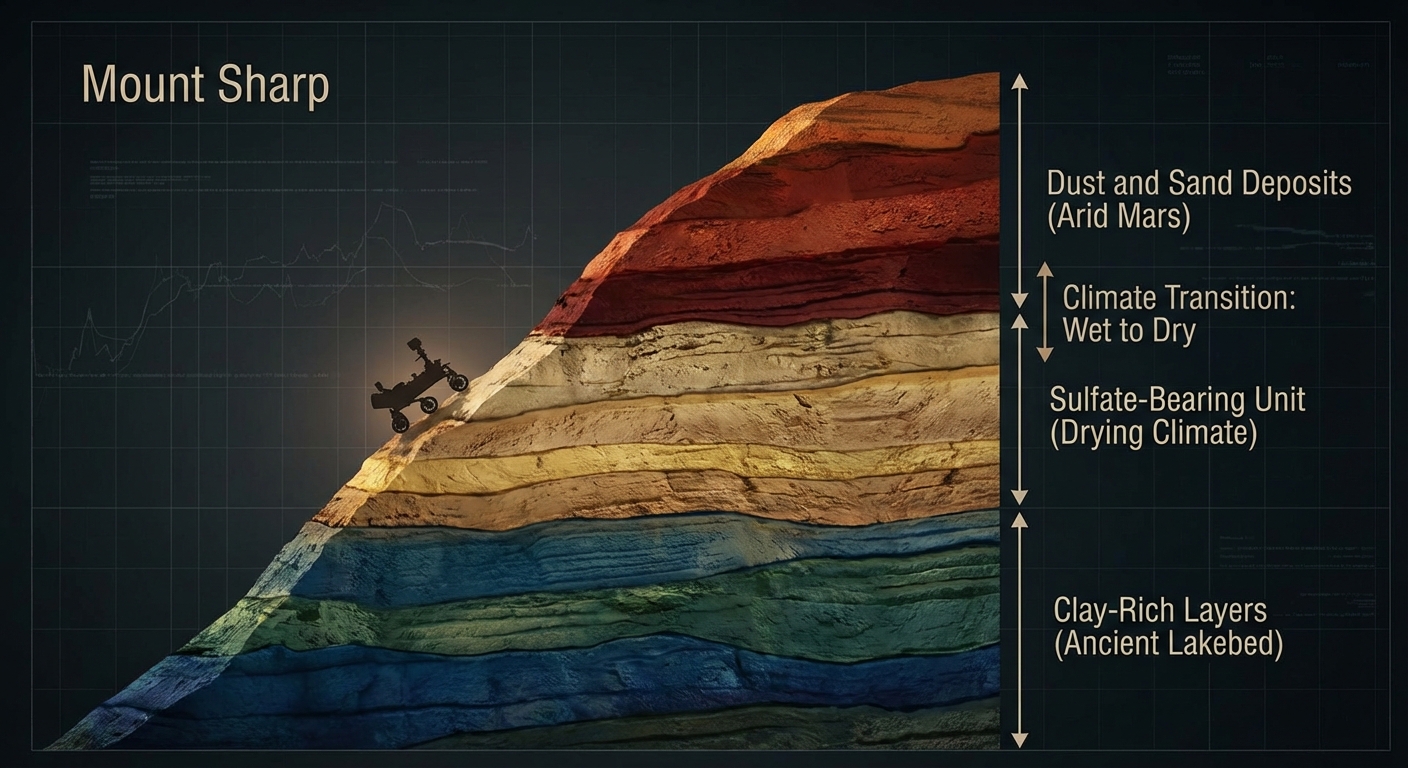
Mount Sharp stratigraphy

Reading Mars's Climate History

  • Mount Sharp: 5.5 km of layered sedimentary rock
  • Lower layers: clay minerals — wet environments
  • Middle layers: sulfate minerals — drying conditions
  • Upper layers: dust and wind deposits — modern dry Mars

Documents the transition from "warm and wet" to "cold and dry"

Perseverance rover at Jezero Crater

PerseveranceThe Sample Collector

  • Landed February 2021 in Jezero Crater
  • Primary mission: Collect and cache samples for Mars Sample Return
  • Current status: 43+ samples collected
  • Key instruments:
  • Mastcam-Z (stereoscopic imaging)
  • PIXL & SHERLOC (micro-scale mineralogy and organics)
  • SuperCam (remote chemistry)
  • MOXIE (oxygen production demonstration)
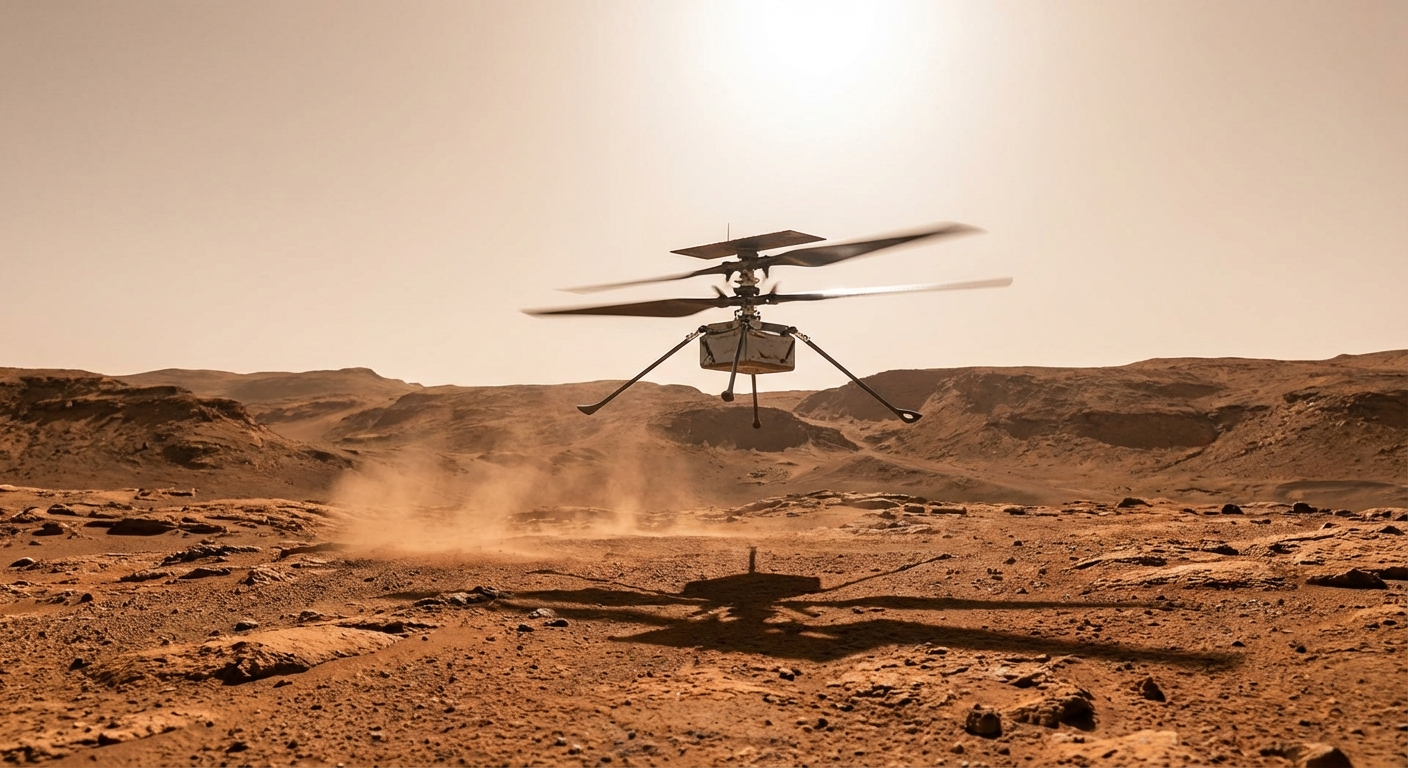
Ingenuity helicopter in flight

IngenuityFirst Flight on Another World

  • 1.8 kg helicopter, technology demonstration
  • First powered flight: April 19, 2021
  • Completed 72 flights over nearly 3 years
  • Total distance: ~17 kilometers
  • Maximum altitude: 24 meters
  • Flight duration: up to 169 seconds

Transitioned from technology demo to operational scout

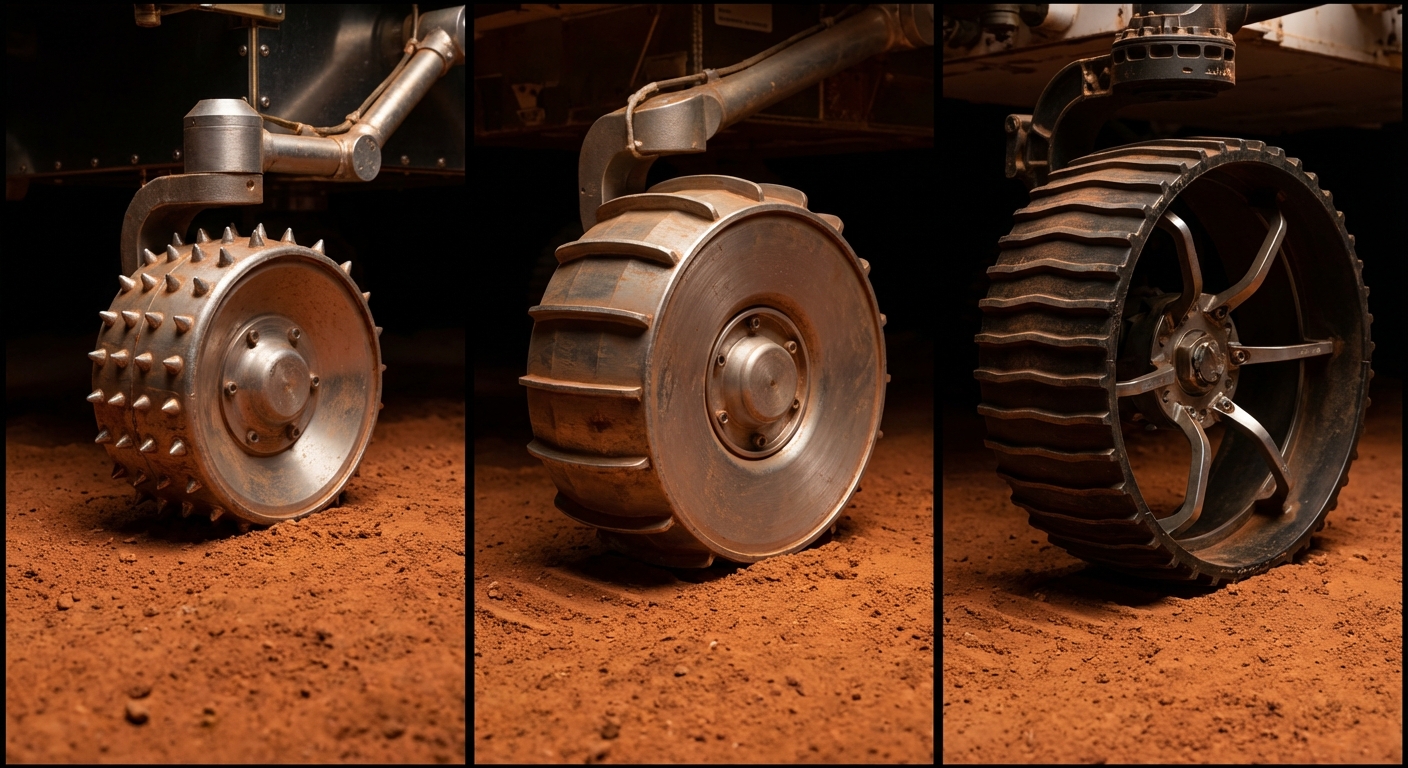
Rover wheel evolution comparison

Evolution of Mars Mobility

  • 1997 Sojourner: 6-wheel rocker suspension, ~0.01 km/hr
  • 2004 Spirit/Opportunity: Rocker-bogie, ~0.05 km/hr
  • 2012 Curiosity: Scaled-up rocker-bogie, aluminum wheels
  • 2021 Perseverance: Enhanced wheels, improved autonomy
  • 2021 Ingenuity: First aerial mobility platform
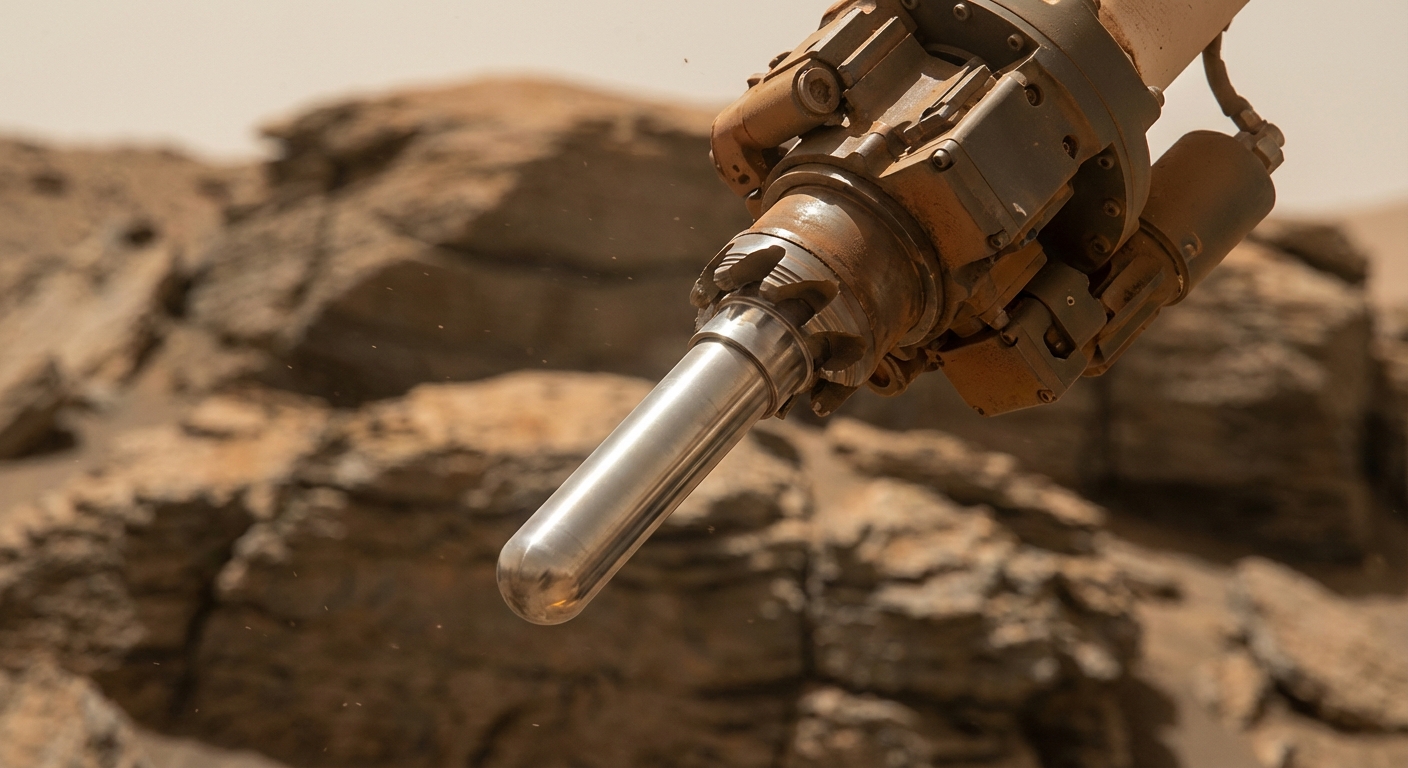
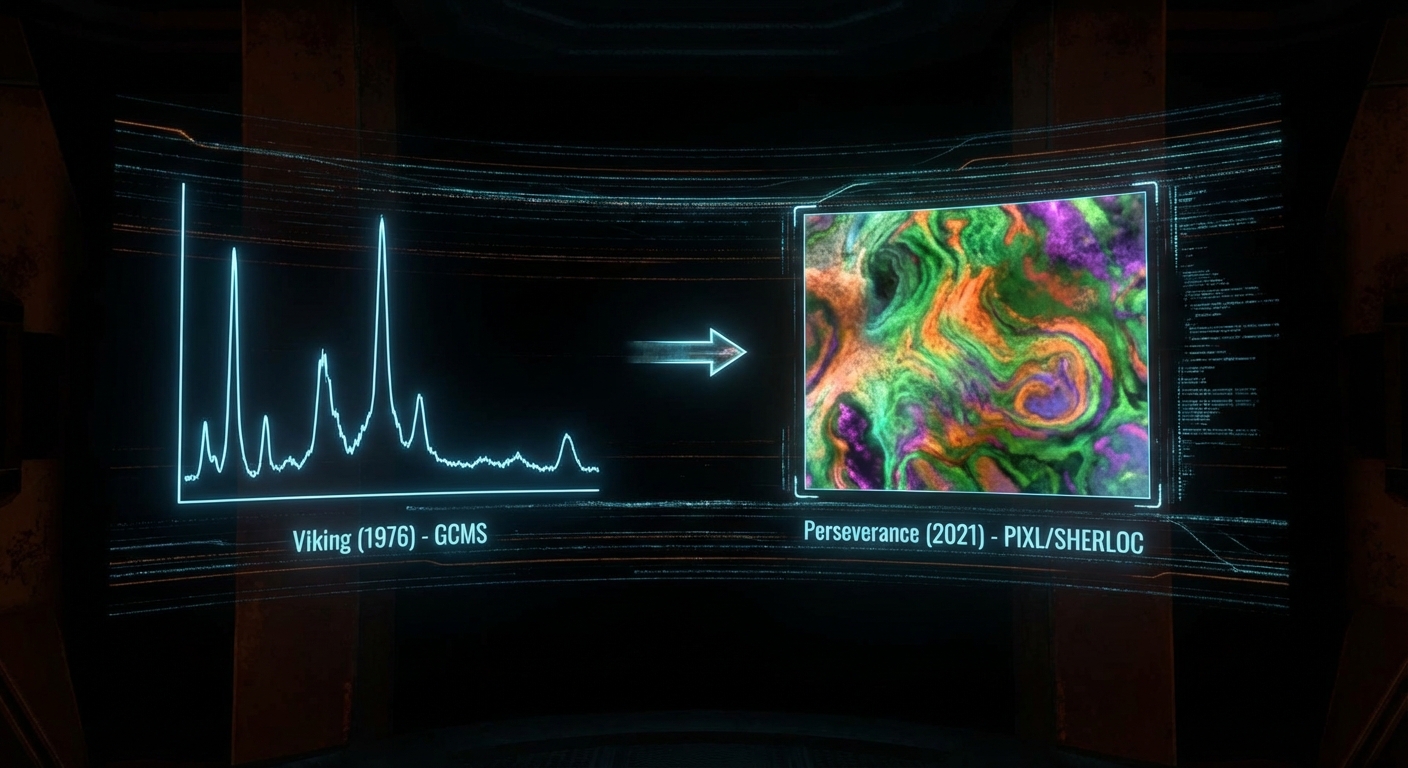
Instrument evolution comparison

InstrumentsFrom Hammers to Laboratories

Spectroscopy Evolution

  • 1997 APXS (single-point)
  • 2012 ChemCam (remote laser)
  • 2021 PIXL (micro-scale XRF)

Mineralogy

  • CheMin X-ray diffraction
  • SHERLOC Raman spectroscopy

Sample Handling

  • RAT → Drill → Sample caching
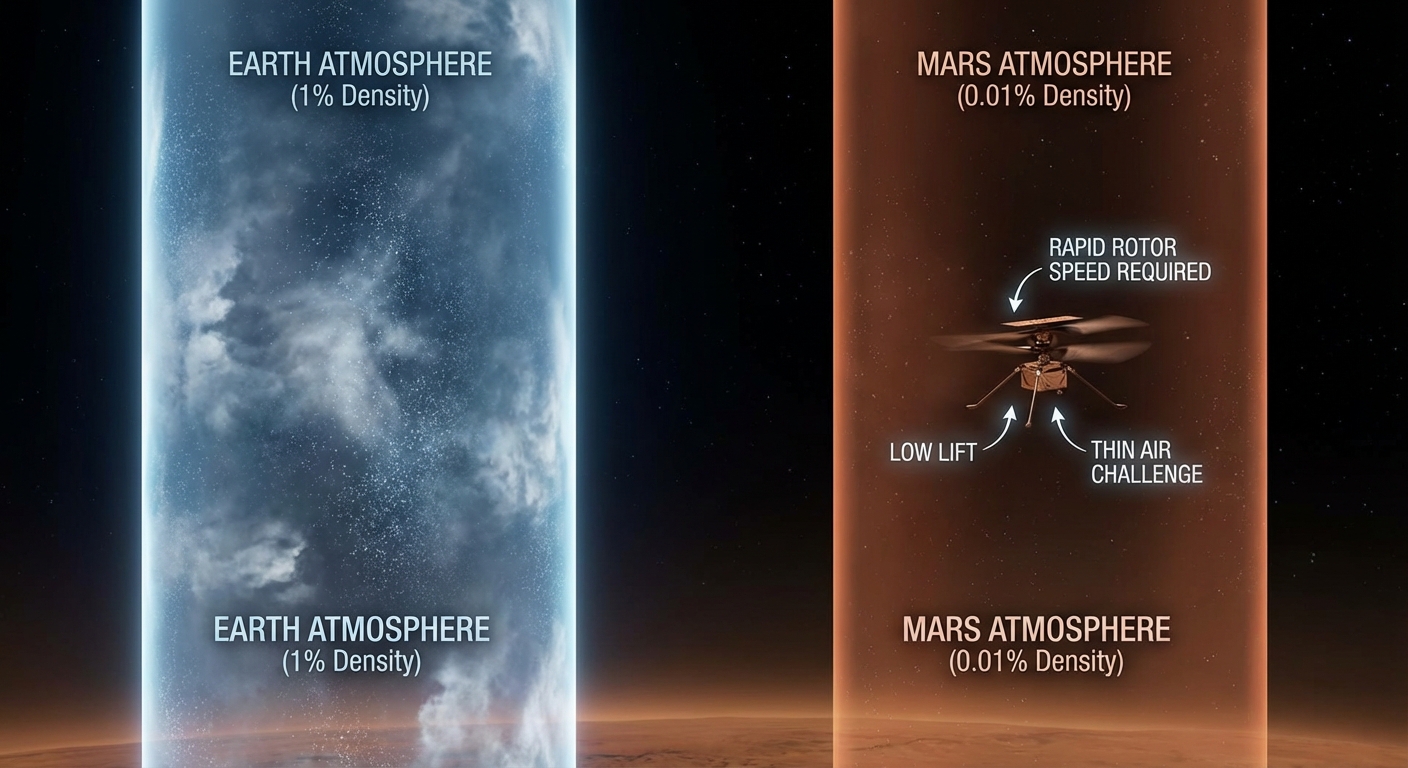
Ingenuity technical diagram

Flying on MarsEngineering the Impossible

The Challenge

  • Mars pressure: ~0.6% of Earth
  • Equivalent to 100,000 ft altitude

Ingenuity's Solutions

  • Counter-rotating coaxial rotors
  • ~2,400 RPM rotor speed
  • Total mass: 1.8 kg
  • Fully autonomous operation

Future: Scout for rovers, access difficult terrain, sample retrieval

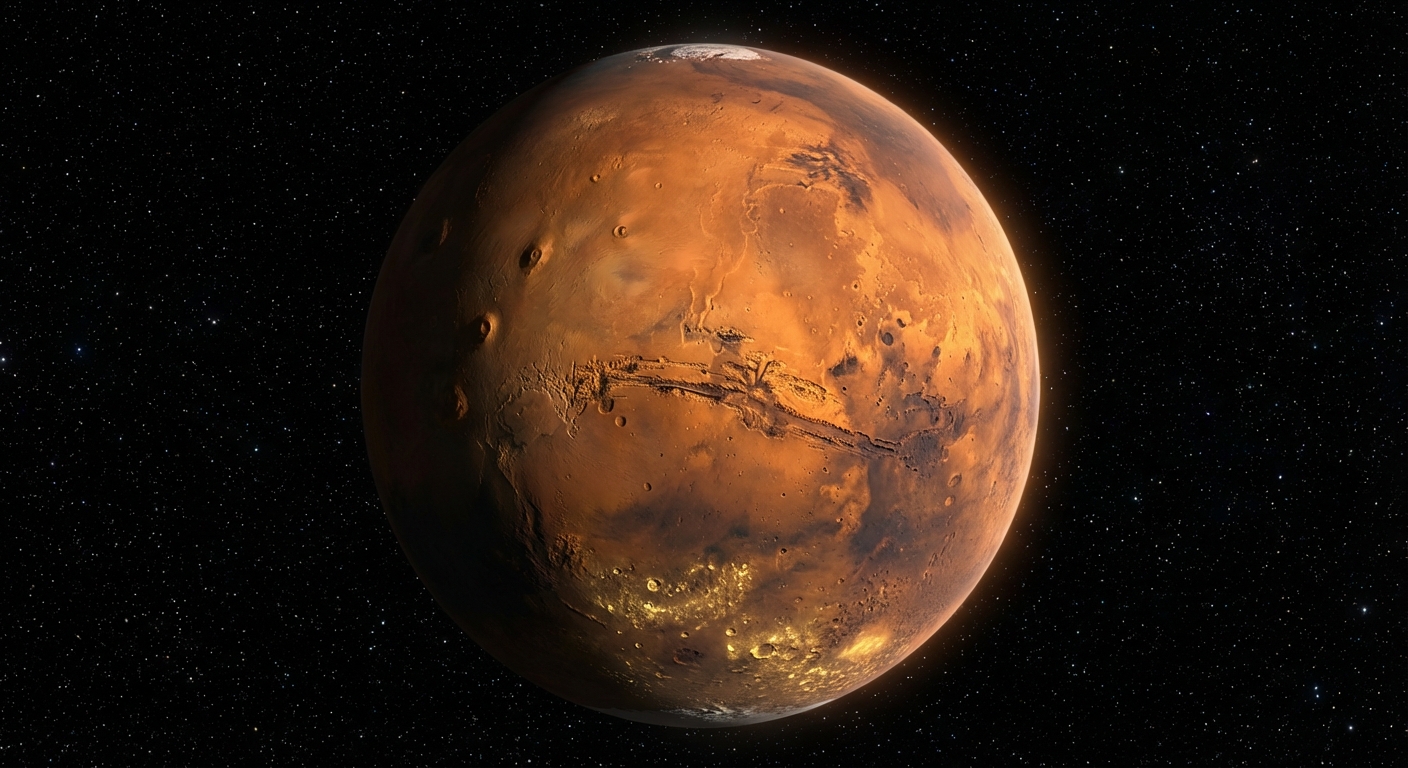
Mars global view with geological features

A 4-Billion-Year Archive

  • Impact record: Craters preserve bombardment history (Shoemaker's legacy)
  • Geological record: Stratigraphy records environmental change
  • Volcanic record: Shield volcanoes document interior evolution
  • Atmospheric record: Isotopic ratios reveal atmospheric loss

No plate tectonics = ancient surfaces preserved

Habitability evidence composite

The Case for Past Habitability

  • Water evidence: Minerals (clays, sulfates, hematite), deltas, channels
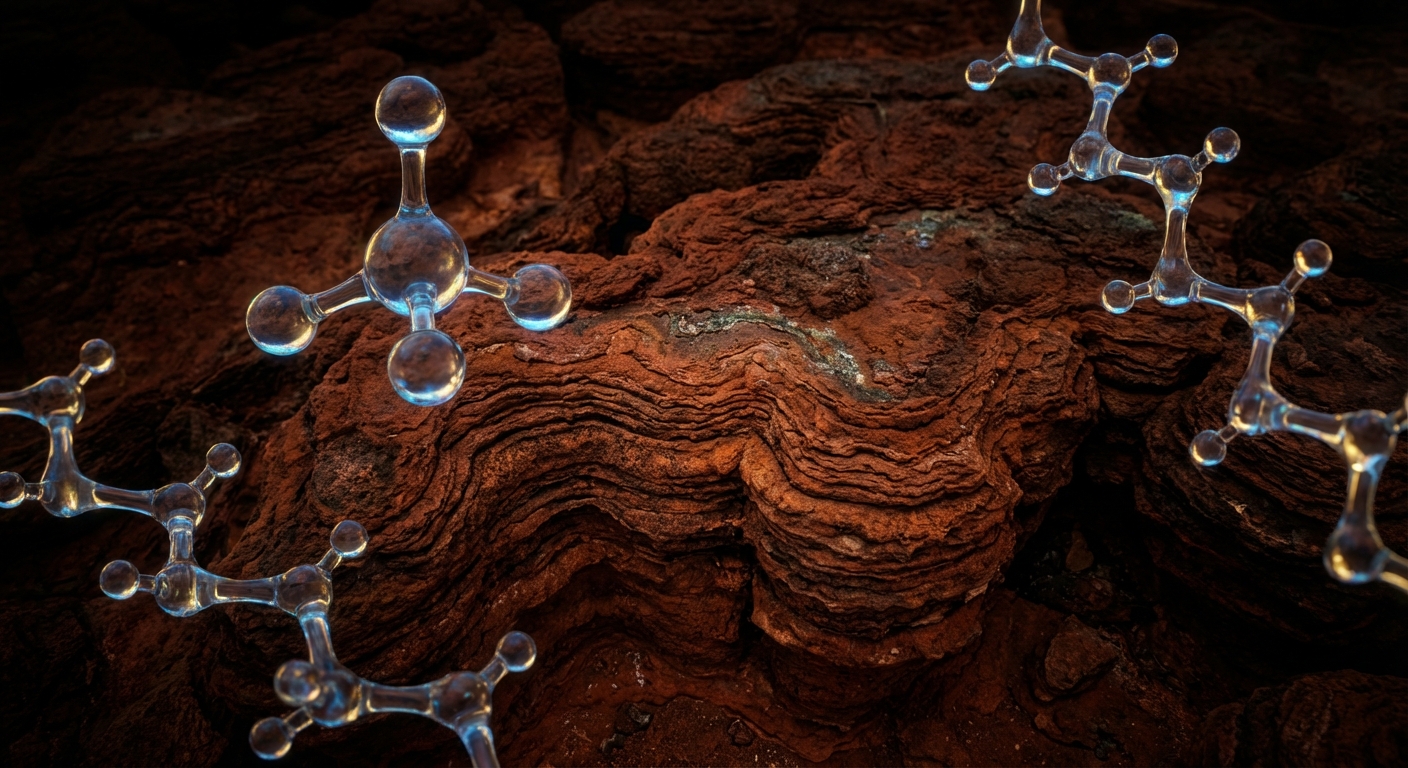
  • Organic molecules detected by SAM in Gale Crater:
  • Complex organics in mudstones
  • Seasonal methane variations
  • Energy sources: Chemical gradients, potential geothermal activity
  • Recent findings: Jezero delta shows potential biosignature textures
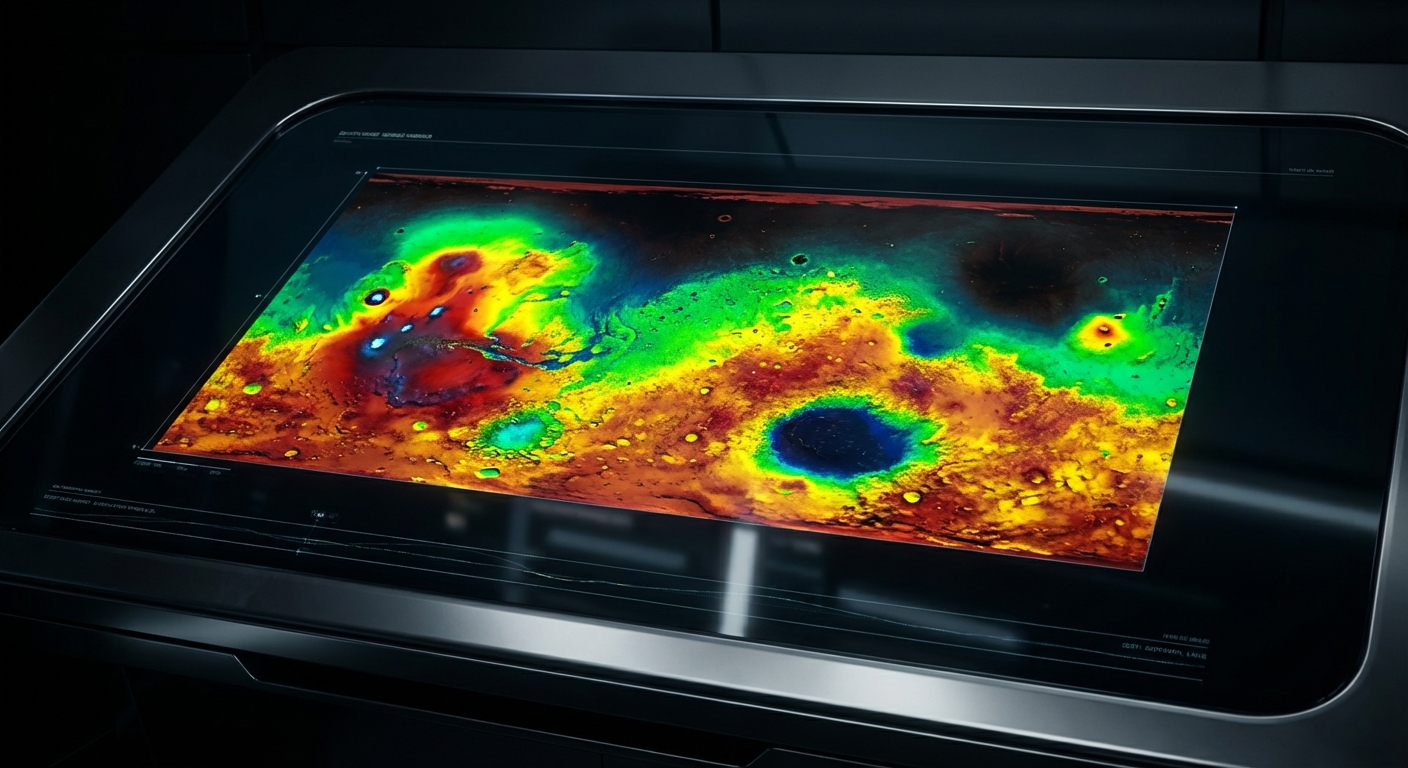
Mars mineral distribution map

Mars's Chemical Diversity

  • Igneous diversity: Basalts from primitive to evolved compositions
  • Aqueous minerals:
  • Phyllosilicates (clays) — water alteration
  • Sulfates — evaporating water
  • Carbonates — CO₂-water interactions
  • Silica — hydrothermal systems
  • Oxidation state: Variable, indicating changing conditions
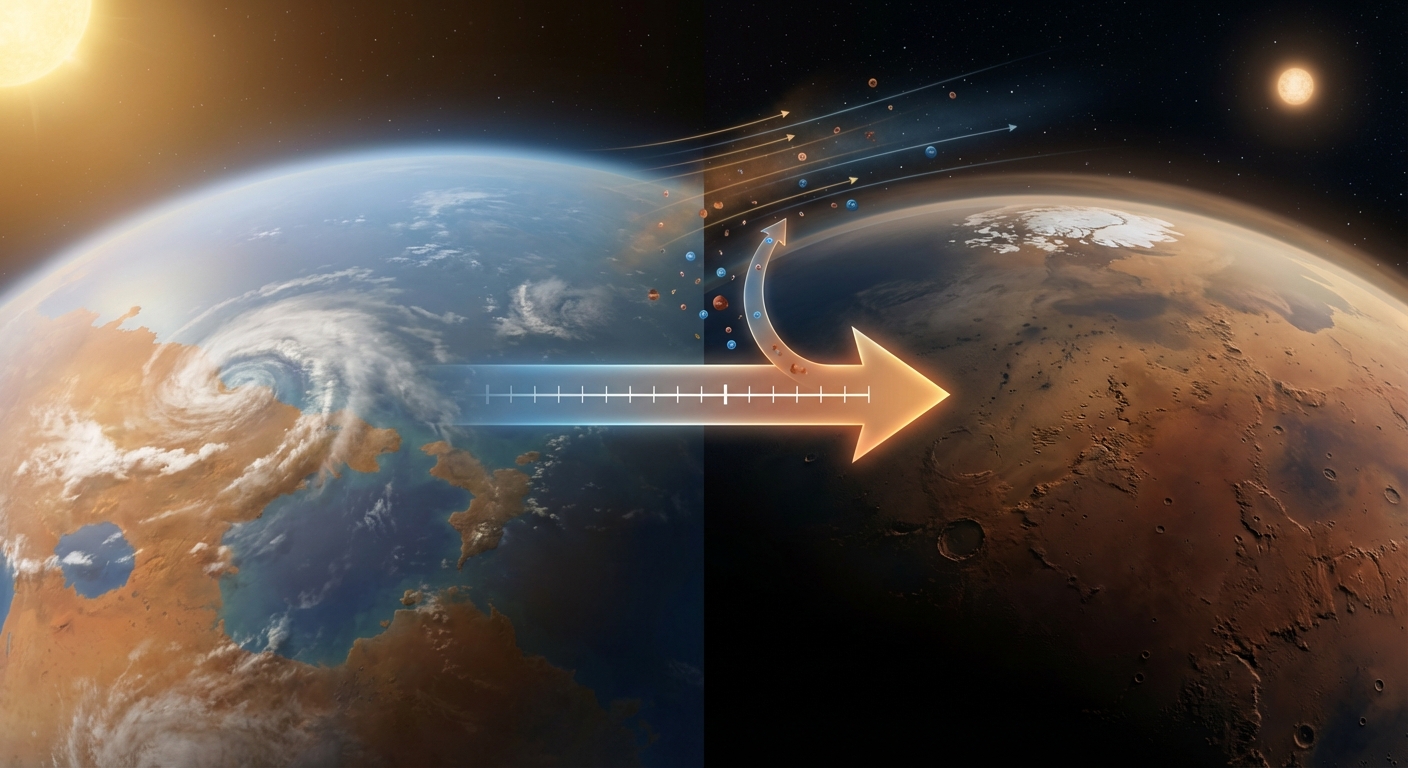
Mars climate evolution timeline

From Warm and Wet to Cold and Dry

  • Early Mars (>3.5 Ga): Warmer, wetter conditions
  • Valley networks, deltas, lakes
  • Greenhouse mechanism debated (CO₂? H₂? SO₂?)
  • Transition (3.5-3.0 Ga): Atmospheric loss
  • Solar wind stripping (no global magnetic field)
  • MAVEN quantifying current loss rates
  • Modern Mars (<3.0 Ga): Cold, dry, thin atmosphere
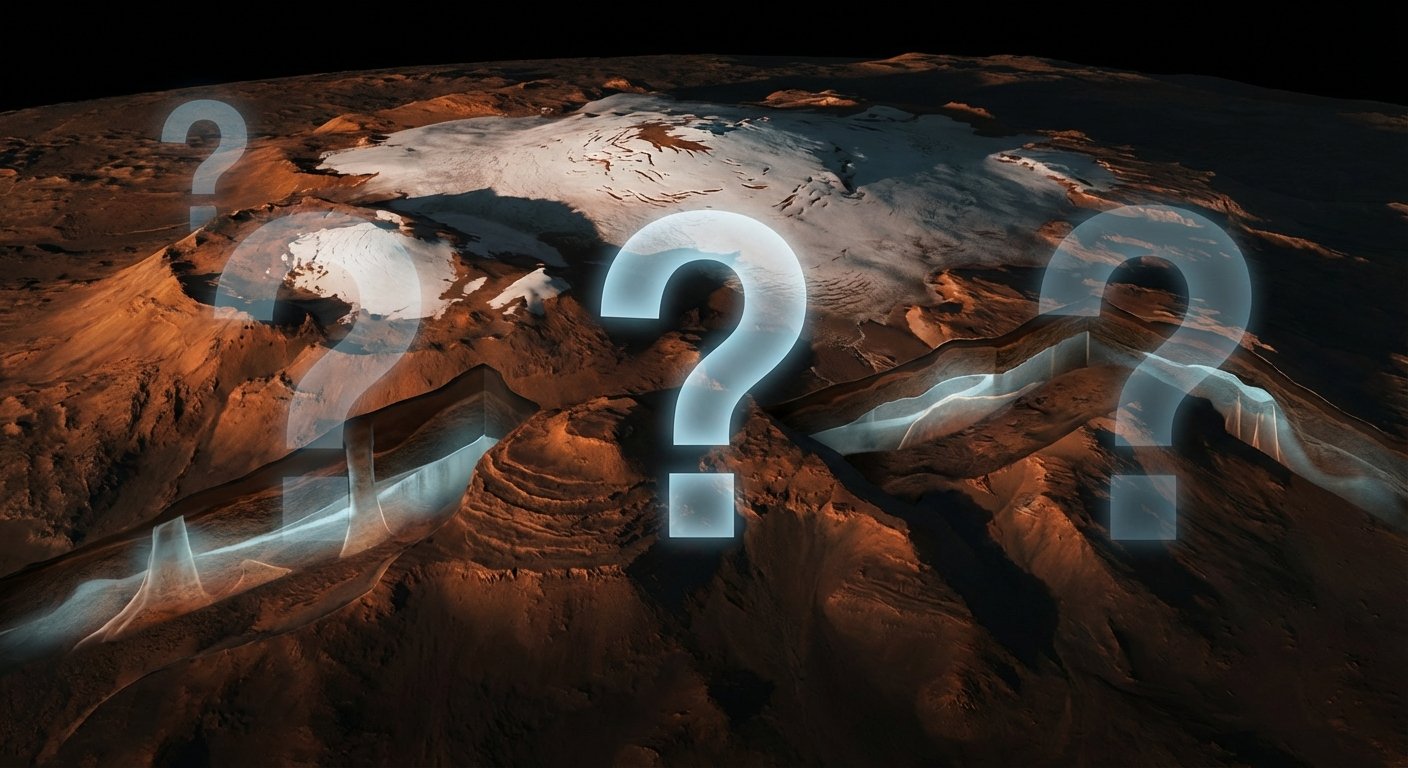
Mars surface with question marks

What We Still Don't Know

  • Duration of habitability: Brief episodes or sustained eras?
  • Organic preservation: How well do biosignatures survive billions of years?
  • Subsurface water: Extent of buried ice and liquid aquifers?
  • Volcanic history: When did volcanism cease? (Or has it?)
  • Climate mechanism: What sustained liquid water under a faint young Sun?
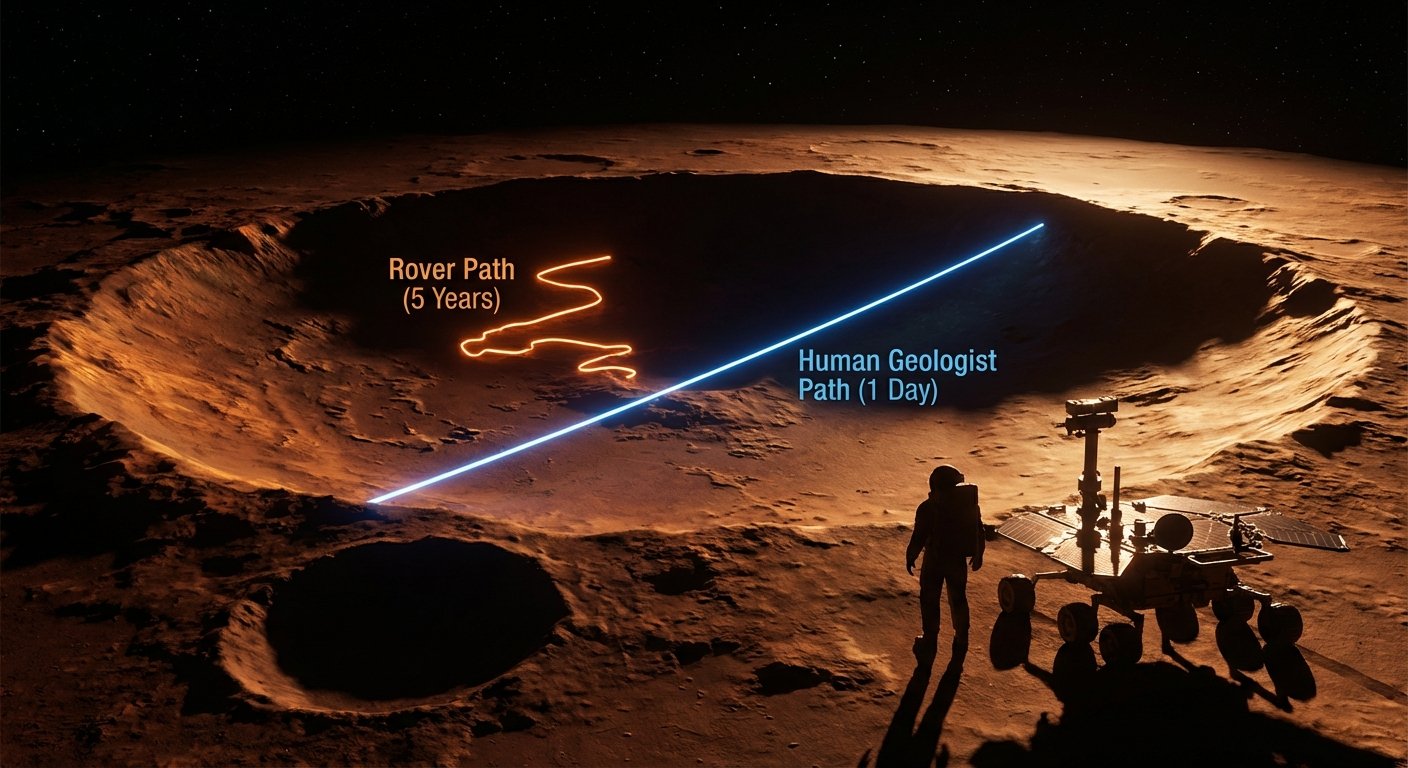
Rover vs human geologist comparison

The Challenges of Remote Geology

  • Mobility: Rovers cover ~km/year; geologists walk km/day
  • Instruments: No rover matches a terrestrial laboratory
  • Communication: 4-24 minute delays; no real-time control
  • Power: Constrains payload mass and operational tempo
  • Risk aversion: Mission rules prevent exploring dangerous terrain

This is why sample return matters

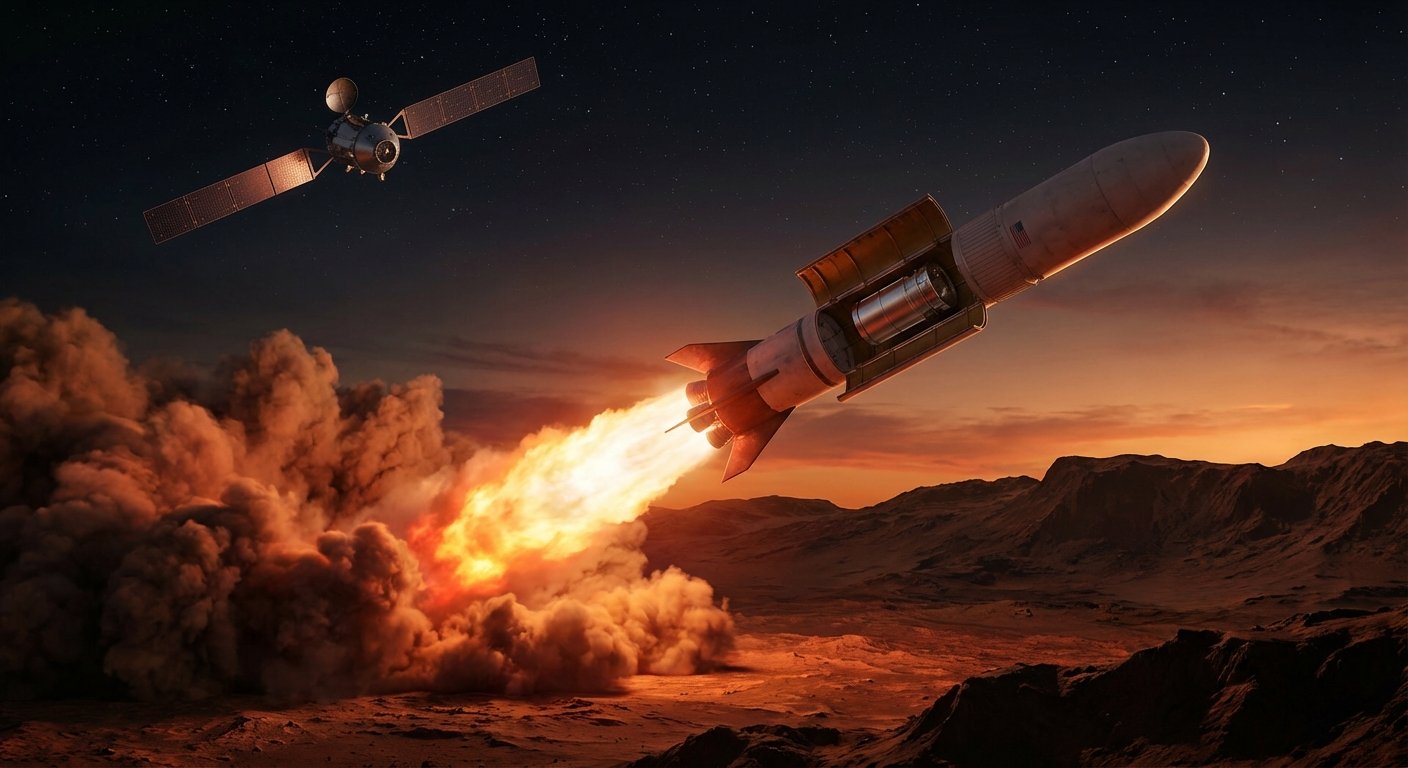
Mars Sample Return architecture

Mars Sample ReturnThe Challenge

  • Multi-mission architecture:
  • 1. Perseverance (active) — sample collection
  • 2. Sample Retrieval Lander — collect cached samples
  • 3. Mars Ascent Vehicle — launch to orbit
  • 4. Earth Return Orbiter — capture and return
  • Estimated cost: $8-11 billion over ~15 years
  • Partnership: NASA and ESA collaboration

No mission has ever launched from another planet's surface

Sample tube and Earth laboratory

Why Sample Return Changes Everything

  • What returned samples enable:
  • Isotopic dating — absolute ages, not crater counting
  • Trace organic analysis — biosignatures at parts per trillion
  • Microscopy — nanometer-scale imaging for cellular structures
  • Future techniques we haven't invented yet
  • Current status: Architecture under review
  • Perseverance: Multiple depot locations established
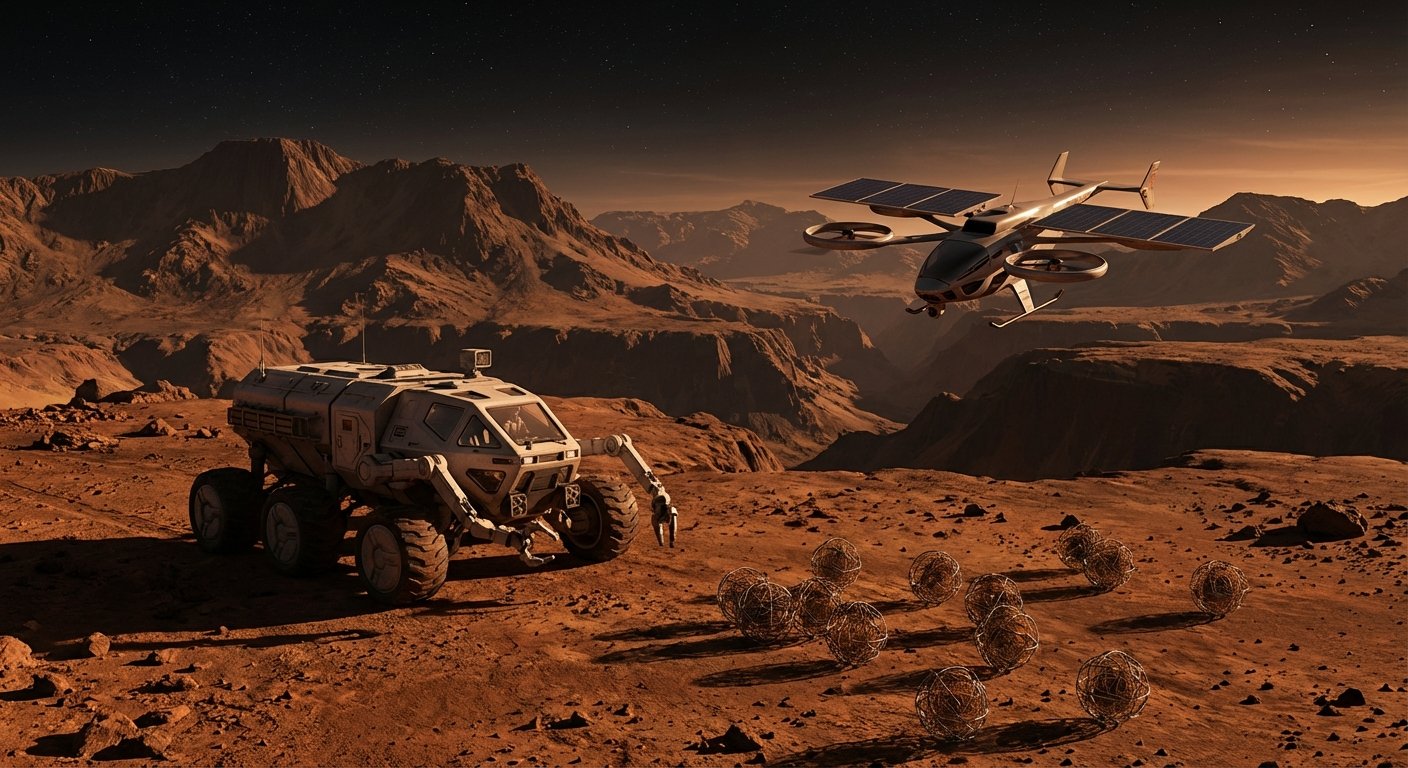
Next-generation Mars technology concepts

The Next Decade of Mars Exploration

Mobility Advances

  • Mars Science Helicopter concept
  • Multi-robot systems
  • Enhanced autonomous navigation

Instrumentation

  • Miniaturized mass spectrometers
  • Life detection suites
  • Deep drilling systems

Commercial partnerships may accelerate sample return

Human-robot collaboration on Mars

Robots and HumansBetter Together

  • Robotic precursors: Site selection, hazard mapping, resource identification
  • Human advantages: Intuition, adaptability, sample selection, equipment repair
  • Synergy model: Robots extend human reach, humans extend robot capability
  • Key resources to characterize:
  • Water ice locations • Dust properties • Radiation environment
  • Timeline: Human Mars missions potentially in 2030s-2040s
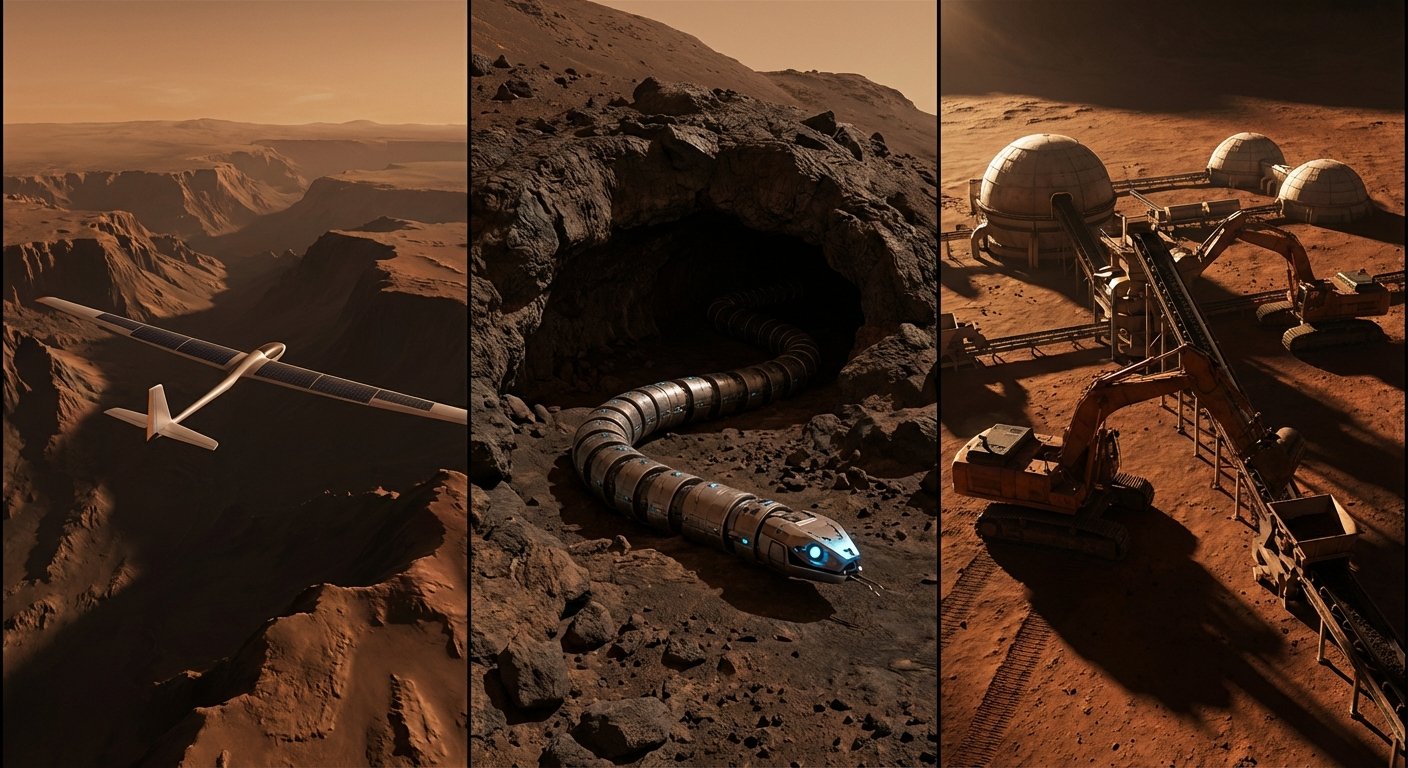
Emerging Mars technologies collage

Beyond Wheels and Rotors

Aerial Platforms

  • Fixed-wing gliders
  • Balloons
  • Multi-copter swarms

Surface Mobility

  • Hopping robots
  • Tumbling robots
  • Burrowing systems

ISRU

  • Propellant production
  • Construction materials
  • Water extraction
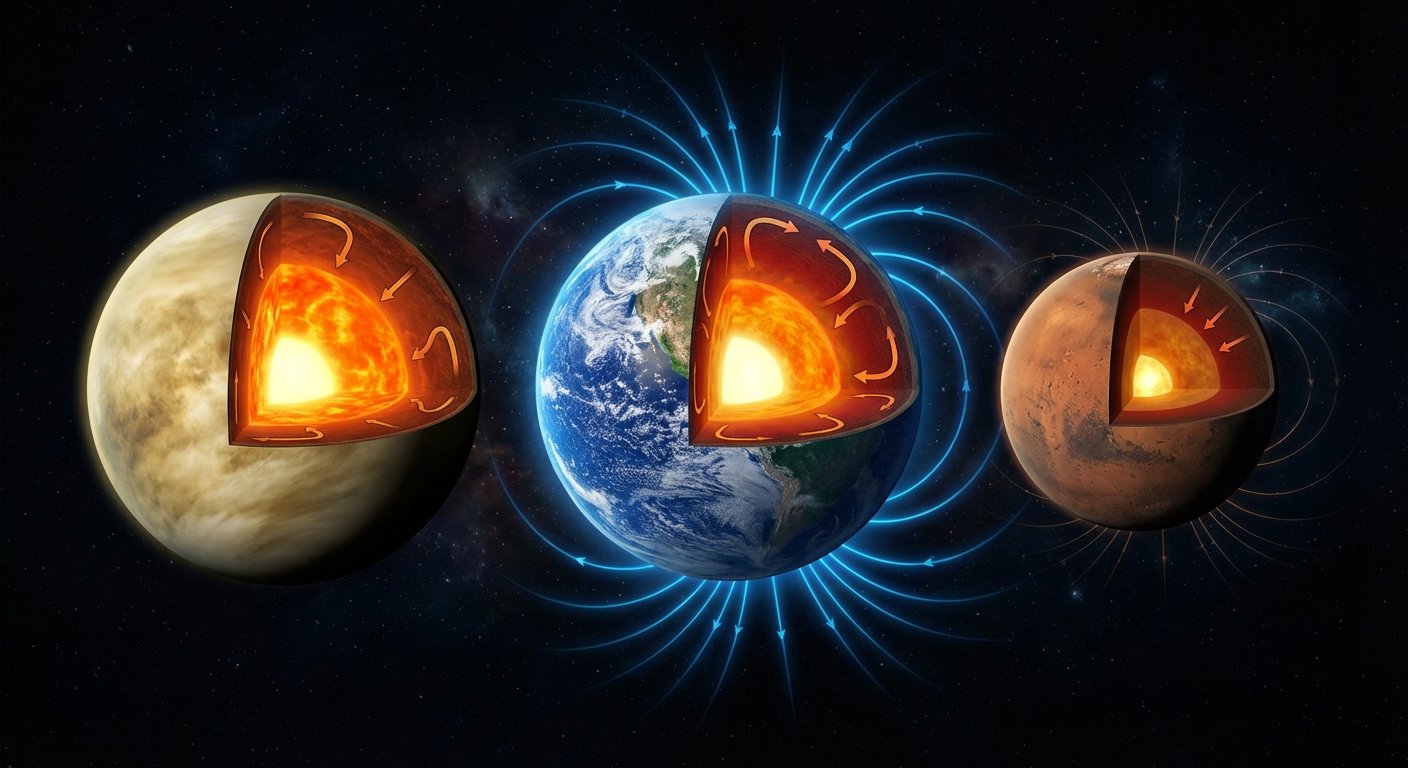
Venus, Earth, Mars comparison

Mars in ContextComparative Planetology

Inner Solar System Laboratory

  • Venus: Runaway greenhouse
  • Earth: Habitable oasis
  • Mars: Failed habitability?

Key Questions

  • What determines magnetic field longevity?
  • Why did atmospheres diverge?
  • Is plate tectonics necessary?
"Shoemaker's vision: Planets as experiments in geological evolution"
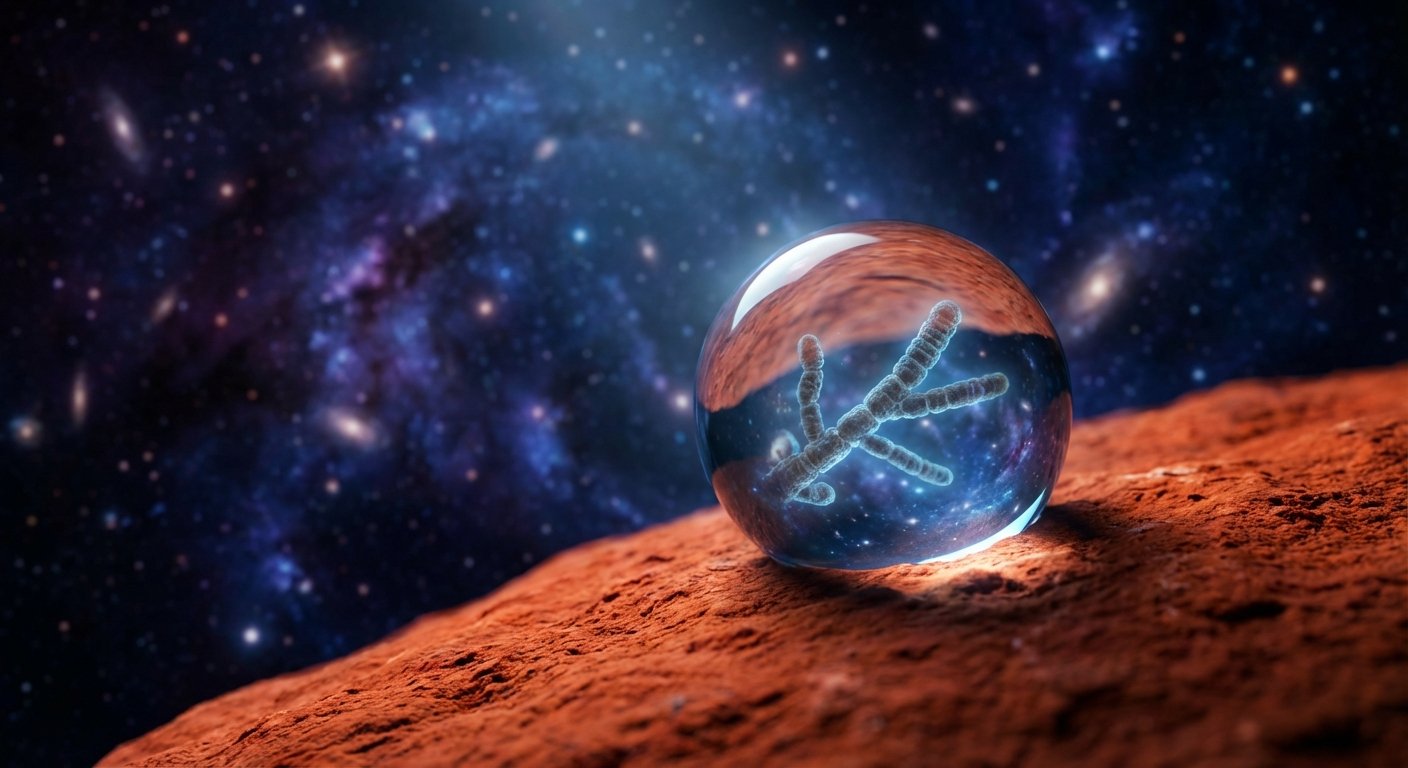
Astrobiology context with ocean worlds

Mars and the Search for Life

If We Find Life on Mars

  • Did it arise independently?
  • Or transferred from Earth? (Panspermia)
  • Huge implications for cosmic prevalence

If Mars Is Sterile

  • What does that tell us about habitability?
  • How rare is life?

Mars informs life detection on Europa, Enceladus, Titan, and exoplanets

Mars sunset with rover silhouette

The Continuing Journey

  • 50 years of achievement: From Viking to Perseverance's sample cache
  • Eugene Shoemaker's legacy:
  • Established impact cratering science
  • Founded astrogeology
  • Inspired generations of planetary scientists
  • The future: Sample return, human exploration, fundamental answers
"Exploration is really the essence of the human spirit." — Frank Borman, Apollo 8

Slide Overview

Keyboard Shortcuts

Space Enter Next slide
Backspace Previous slide
Home First slide
End Last slide
N Toggle speaker notes
O Toggle slide overview
F Toggle fullscreen
? Show this help
Esc Close panels

Touch Gestures

Swipe left/right to navigate between slides